Life is hard. I imagine most of you are going through it day in and day out.
Good luck. I’m rooting for you.
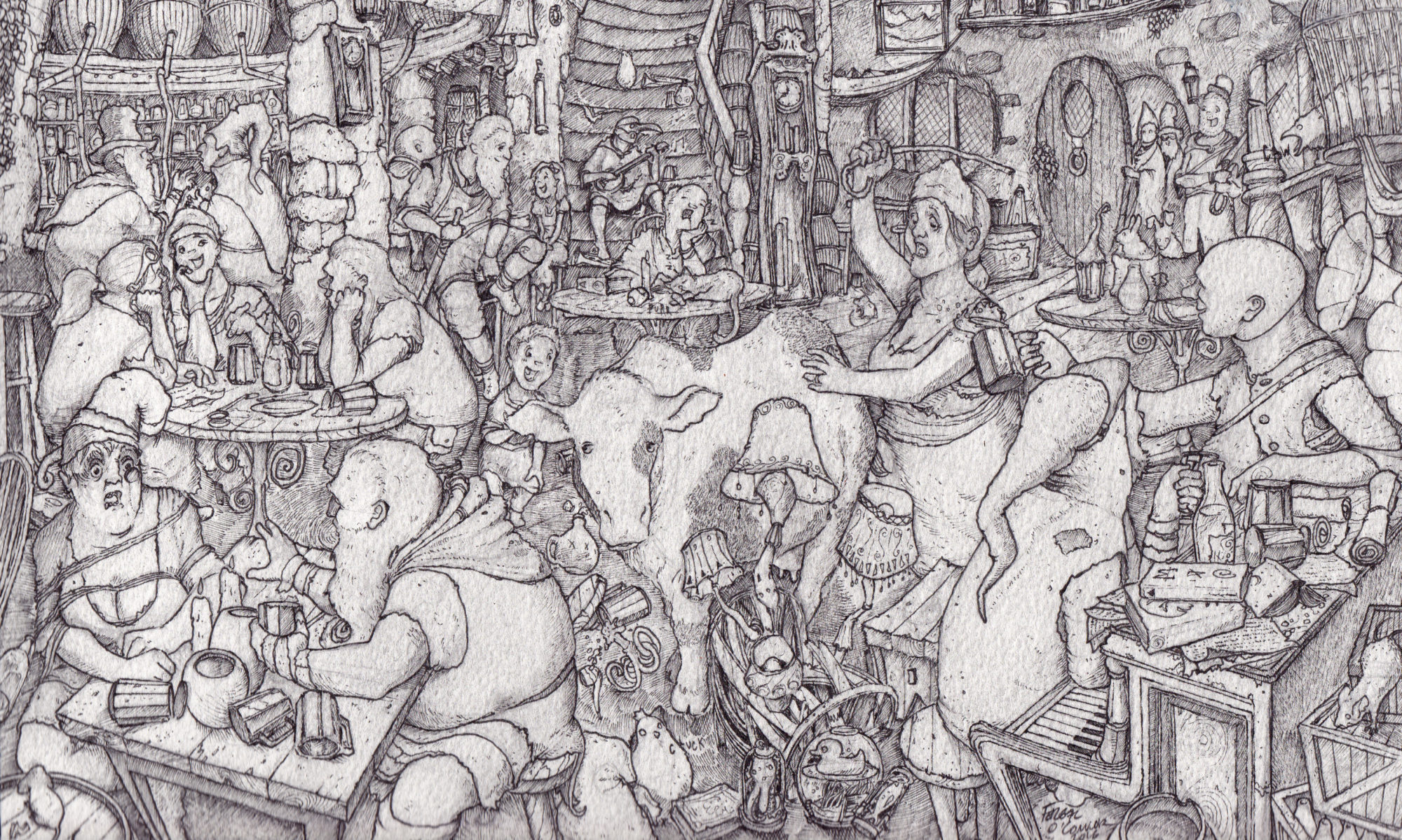
For dragon enthusiasts
Life is hard. I imagine most of you are going through it day in and day out.
Good luck. I’m rooting for you.
Previous chapters to the right
Updated Wednesdays and Fridays
Chapter 18
No one was home when I broke into the Hemlin-cousins’s house again and searched Osret’s room. He was a filthy Celestial who needed take his dishes back to the kitchen. I didn’t find the sword or money.
Moving down, I skipped the other bedrooms for the moment and cased the great room. The door fragments had been picked up, the cutlery put away, the furniture righted. They’d mopped about half the floor, moving lights and tables to the kitchen side. I looked around with a blank mind.
The room was just a big, rich room. Men lived here. It had hardwood floors and thick, overhead beams with irregular grain, but what told me it was men was the furniture. Girl-chairs tend to have thinner frames, smoother edges, and painted bits. They’re easier to move when your friends need help. This was a house full of boy-furniture with thick log frames, overstuffed cushions, and wider seats. The cousins had couches but no loveseats. They didn’t have piles of blankets and pillows tastefully spread around.
That got me thinking of food, and when I looked at the kitchen, I noticed a pile of stuff in front of the pantry. They had been mopping, but the pile struck me as suspicious. At a block, I pushed into the pantry and started eating their ambrosia while I pulled the shelves down and poked the ceiling. One of the floor-boards was loose, so I pried it open with a steak knife. I found dust and old rice, but couldn’t see to the end of a crevice. The crevice was maybe wide enough for the sword. I got a candle and was crawling around on the pantry floor when the two remaining cousins came home.
Apseto, the one who had found it in the lagoon, and Nurim, the wiry, always moving man, walked through their front door in a conversation long since given to argument. As they walked into the great room, they shoved their heavy, over-built couch in front of the flimsy main door.
“I’m just saying,” said Apseto. “I think it’s time we got out of this.”
“I don’t think we can,” said Nurim.
“I think we can,” said Apseto. “The crazy guy died in a sword-fight with the Messenger. Osret’s been arrested, but he’s solid. He’ll go silent. We just…wait.”
I peaked around the edge of the pantry door. They both had guns, lots of guns, with knives, armor, and boots. Nurim was carrying a pair of Thelucidor 37s, fast-action word-of-gods famous for their ability to burn large amounts of ammunition very quickly. Apseto had a breaching rifle, some kind of stupid revolver in a quick-draw holster, and another iron, a hold-out pistol, stuffed down the back of his pants in case he suddenly needed another hole in his butt. Their armor had abs, covered in unused tie-downs and spare magazines.
I had the Drowning Breath.
Death upon you, let’s just go!
Nurim was saying, “Yes, Osret’s solid, but the Messengers–” and he didn’t finish when I pushed the door open and walked out.
They looked at the naked blade in my hand and their guns in sheaths. Everyone stayed very, very still for two or three long breaths.
And Nurim asked, “What can we do to make you go away?”
“I want the saber.”
“It’s in a notch in the beam over your head,” Apseto answered.
I didn’t look up. I kept the Drowning Breath between us and used my left hand to feel around. My fingertips only grazed the base of the wood. I could climb on some boxes, but that would be treacherous footing, hard to initiate from.
“Put your hands on your heads,” I said.
They did.
And at that moment I realized they weren’t going to draw. They would try to shoot me if I started something, but I could see it in their eyes, their hands, their faces, they just wanted me to leave.
Without looking, I stepped up on a hard case, fumbled around the beam, and finally found a little groove. I’d looked right at it and never seen it. Inside that I found the forgery of Hasso, took it, and stepped off the box of food. I sidled sideways toward the door. They rotated with me but kept their hands on their heads. They had a small armory between them, and all the thoughts in my head were screaming for death and murder. I wanted one of them to draw just to be done with everything.
They didn’t.
“I didn’t kill your cousins,” I said.
Apseto didn’t react, but Nurim shook his head. He wasn’t arguing; his head-shakes meant disbelief, incomprehension, befuddlement. It looked like he was waking up.
“Okay,” he said, meaning nothing.
I got my back to the broken doorway, stepped through, and ran.
Athena had the best origin story of the Greek gods.
BH will be free June 1st through 3rd to celebrate moving to a new apartment.
It has a dishwasher.
Not BH, the apartment. BH has no dishwasher.
Also, for anyone following KN or more abstractly TiH, now you can get the first one.
Watching F7, and these are some of the most comic-book shenanigans ever seen.
A lot of the rhetoric around AI* is wildly off the mark.
When something becomes more efficient or cheaper, people want more of it. This is a law of economic nature.
Generative AI is making grunt-workers more efficient. There will be more people doing more of it. Now that isn’t an unequivocable good, as the form of this could be more paperwork since one paperwork-worker can do more. It does mean that a lot of paperwork that people want done will get assigned, and some of the restraining influences on the spread of paperwork before will be overcome.
Consider your TPS reports. You hate them. I hate them. The managers who assign them do understand this, mostly, and most of them are trying to reduce TPS reports. TPS reporting is expensive, takes time, and all that, so there’s a restraining force.
But people still want TPS reports, so when a manager discovers one admin-staffer can do twice the TPS-reporting, those TPS reports will be assigned. Unclogged, the TPS reporting will flow. There will be TPS reports everywhere. And efficiency is never as clean as one imagines, so more admin-staffers will be hired to do TPS reports with generative AI TPS reporting software, and the world will become a brown, stinkier place. But there will be more admin-staff jobs.
There will also be people who make generative AI models, tune them from TPS reports, and provide tech support. The admin-staffers will not be fixing their models.
There will be more jobs elsewhere too. Data labelling is going to be a big thing, and people need to do it. All these systems run on hardware. Hardware in the cloud is still hardware; it’s just hardware somewhere else. So that hardware will need sysadmins, manufacturers, supply chains, and developers.
If you want a paradigm, imagine the transition from horses to cars. Transportation became more efficient. Before mass-market cars, only a few people had horses. Vastly more people now have cars. Sure, a very few cars, fewer than horses, would provide the transportation needs for the few people who had horses, but that isn’t what happened.
We’re staring into a future of more jobs, more employment, more TPS reports documenting that employment, and generative AI.
*That name, AI, is wildly off the mark too, but I haven’t found a better one. Replace it with ‘computers doing math really quickly’ whenever you see it.
If at the end of days I meet my maker and he judges me for my life, the prosecution may accuse, “Matthew, you’re terrible at paperwork.”
I’m not really going to have an answer for that.
./”kjb
Baroness Alyssa told me, “Wait ’til you see the reflection of the Moon in the lake, then speak Utor. Karesh Ni will be revealed in starlight.”
I’m going to start publishing TiH on Wednesdays and Sundays, until about chapter 30. It’s a big break point.
KN needs some work.
The reason TiH is working is Kog has a distinct goal to work toward. He’s elliminating everything that connects him to the failed assassination. That lets the character drive the narrative. Elegy doesn’t have that yet, and the pieces to set it up aren’t falling into place.